
13 Ottobre 2026
Modern Godspeed Tee Limited Pants Colorway
Godspeed Premium Denim and Outerwear: The Buyer’s Guide
Most people meet Godspeed through a graphic tee or a fleece two-piece, and then discover that the heavy end of the catalogue follows a different set of rules. Within denim and outerwear that the New York label spends its construction budget, and there the terminology on the product page earns attention. Terms like garment wash, wool body, vegan suede, 3M reflective and numbered run each describe a manufacturing decision that changes how a piece wears and ages. This guide takes the categories in order, jeans first and jackets last, showing what each specification is actually doing. Where a figure could be confirmed, the 2026 market estimates observed are given; where none could be, that is flagged. Each dollar amount here should be understood as an observed 2026 range and not an official price.
Premium Denim, Unpacked
Denim is the most stable part of the god speed clothing catalogue, and the most predictable in price. Observed 2026 market estimates place the premium denim pieces at around $250, and that figure holds for the jeans and the jacket alike. Thanks to that consistency, a denim-on-denim pairing can be budgeted at roughly $500. Denim draws on the same wash family as the fleece and shorts lines: Black Wash, Grey Wash and Blue Wash, named finishes, not generic colours. Applied on the finished piece, a garment wash softens the hand straight away and gives the faded, slightly irregular surface the label favours. The process also means small variation between individual units is normal and expected rather than a defect.
Jeans, Wash and Cut
The jeans follow the same silhouette approach as the rest of the range, which means relaxed rather than slim. The Infinity Denim V2 and comparable named pieces have been observed at around the $250 mark, landing well above mall denim and beneath most luxury labels. The leg is cut wide, so the jeans gather over a boot or slide rather than breaking at the ankle, and that is by design rather than a length error. Washed denim keeps developing after purchase, so a Blue Wash pair will fade at the knees and seat over a season of regular wear. If you want the finish to hold near how it arrived, wash cold, inside out and infrequently. godspeed shorts A pair bought a size up will also sit lower on the waist, which changes how the hem falls.
The Denim Jacket
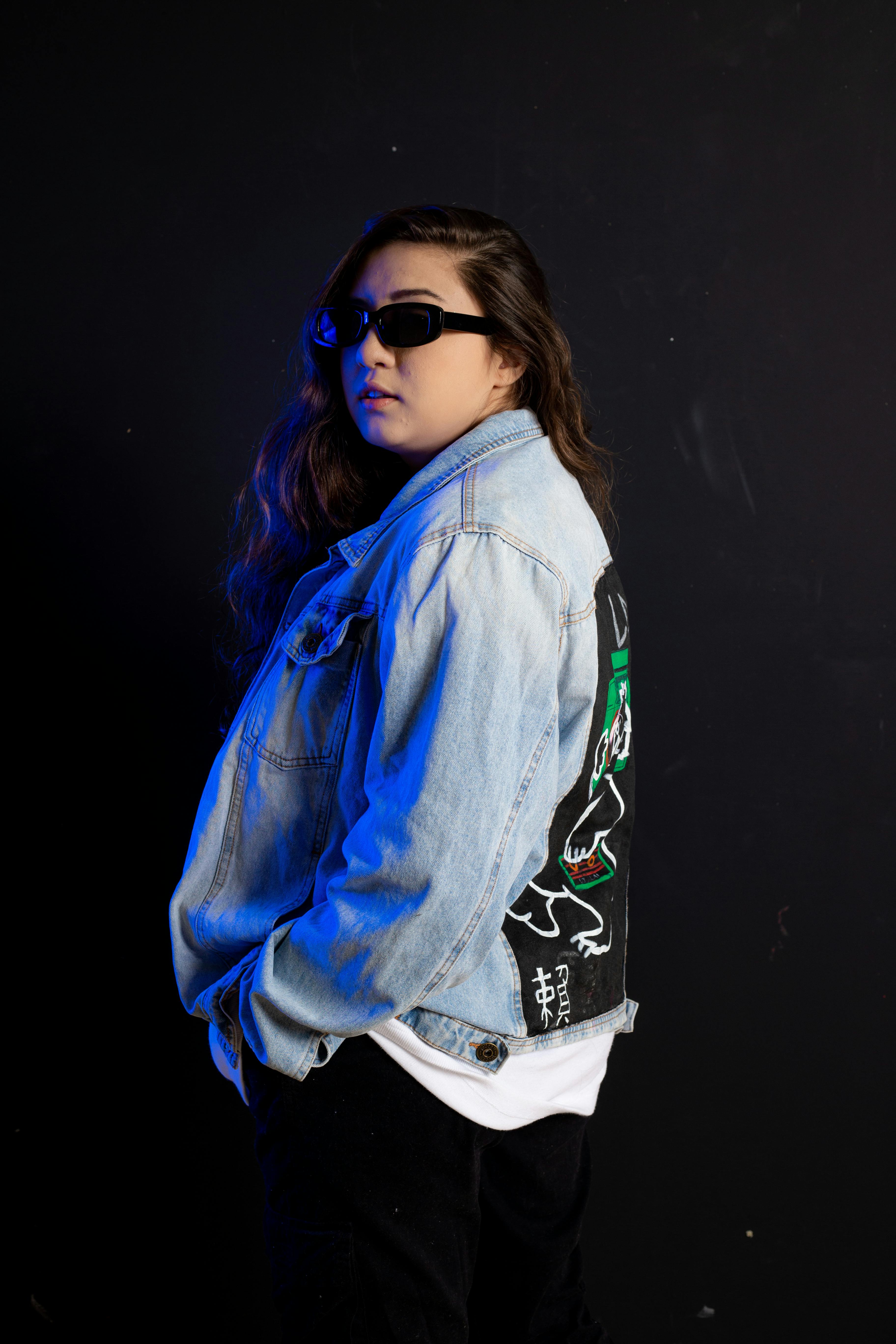
The denim jacket, sold under the GS 4Ever name and observed at around $250, is the piece that draws the denim collection together. The wash family is shared with the jeans, which makes a matched two-piece straightforward to assemble in one order. Built on the same boxy logic as the fleece, the body sits square across the shoulders and leaves space for a layer underneath. That matters in practice, because a heavyweight godspeed hoodie worn under a slim denim jacket creates an uncomfortable, bunched result. Graphic treatment leans to embroidery and appliqué rather than print, since washed cotton holds stitching better than ink. The jacket also works as a shoulder season piece rather than genuine cold-weather protection.
Varsity: Wool, Vegan Sleeves and 200-Unit Runs
Varsity is where the label makes its plainest statement about scarcity. Two pieces are singled out, the F.T.D and Chrome Seduction jackets, stated as production runs of 200 units each with numbered authenticity tags attached to the garment. The traditional template is unchanged, a wool body with contrast sleeves, except that the sleeves come in vegan leather or vegan suede instead of animal hide. That swap shifts the character: vegan suede reads softer and matte, while vegan leather keeps a sharper sheen. Satin detailing and appliquéd lettering complete the build, which is why these carry more visible labour than anything else in the range. Retail figures for the varsity pieces remain unconfirmed, since the product pages had already sold through by the time they were checked.
The Leather Moto and the Puffer
Alongside varsity, the catalogue carries a leather moto jacket and a puffer jacket, and both arrive as limited seasonal entries rather than permanent fixtures. Of the two, the moto is the more classical, built on a silhouette that predates streetwear and the least dependent on graphics. The puffer is its practical opposite, built for insulation and typically the warmest thing the brand offers in a given season. Neither had a confirmed retail figure available, since their pages were sold out at the point of research. One point needs to be precise: the $595 marketplace listing seen for a varsity piece is a seller’s asking price. What a seller hopes to receive is not what the brand charged, and an asking price is only the former.
Cargo Trousers and Technical Detailing
Cargo pants deserve a place in this guide because the flagship pair sits at the top of the bottoms price ladder. Observed at around $350 in 2026 market estimates, the Wax Flare Premium cargo lands higher than the denim and higher than most of the sets. 3M reflective detailing carries the difference: muted under normal light, bright when a direct beam hits it. That detail comes out of technical and workwear traditions and is applied selectively rather than across the whole garment. The cut follows the same relaxed logic as the jeans, with volume through the thigh and a flared or stacked finish at the hem. Buyers comparing this with the $140 Militia cargo shorts are paying for construction and finish, not more fabric.
Pulling the Numbers Together
Gather the observed figures in one place and the internal logic of the range becomes much clearer. Denim occupies a flat $250 tier covering both the jeans and the jacket, cargo pants sit above at roughly $350, and every jacket that could be checked had already sold out. For orientation, the softer categories run substantially lower, with t-shirts between $128 and $200, hoodies roughly $200 to $270, and sets from $155 to $360. That gap is the clearest signal of where the label concentrates its construction spend. The table below covers the heavy end only, and each figure is a 2026 market estimate observed rather than an official price. Where no reliable figure existed, the entry admits it instead of guessing.
| Type | Example piece | Construction highlights | 2026 observed USD |
|---|---|---|---|
| Denim trousers | Infinity Denim V2 | Garment-washed premium denim, relaxed leg | About $250 |
| Jacket, denim | GS 4Ever | Boxy body, matching wash family, embroidery | About $250 |
| Varsity jacket | F.T.D, Chrome Seduction | Wool body, vegan-leather or vegan-suede sleeves, numbered run of 200 | Not confirmed, pages already sold out |
| Cargo trousers | Wax Flare Premium | Relaxed flared leg with 3M reflective detailing | About $350 |
| Moto and puffer | Seasonal additions | Leather shell; insulated shell | Not confirmed; pages sold out |
How It Fits, Layers and Wears
Heavy pieces magnify every fit decision made underneath, which means layering has to be planned rather than improvised. The house silhouette runs boxy and oversized-relaxed, so outerwear is already cut with room and rarely needs an extra size for layering. A jacket bought one size up on top of an already generous cut will look borrowed rather than intentional. Fabric weight settles the rest: a wool varsity body and a garment-washed denim jacket behave nothing alike across a winter. Both denim and wool respond badly to aggressive laundering, while embroidery and appliqué dislike high heat. What follows applies to both categories and will prolong the life of anything in them.
- Cold wash, inside out, and only when the denim genuinely needs it.
- Keep wool varsity bodies out of the machine entirely; spot clean and air them instead.
- Never tumble-dry a piece carrying 3M reflective detailing, as heat damages the finish.
- Store heavy jackets on a broad hanger so the shoulders keep their line.
- Keep the numbered authenticity tag on a limited varsity piece, because it matters later.
Buying the Heavy Pieces Without Regret
In the heavy categories a mistake is expensive, so it helps to follow a short process. Availability leads, since production runs small and outerwear goes before the softer categories do. Price is the second, since resale asking figures circulate widely and are frequently mistaken for retail. Authenticity is the third, and it matters most on numbered pieces where the tag is part of the product. The last consideration is coherence: a $350 cargo works when it shares a silhouette language with the godspeed shirts and fleece already in the wardrobe. Working through the order below will prevent nearly every common error.
- Begin by establishing the category, because denim, varsity and moto follow different rules.
- Check the fabric line for wool, vegan suede, vegan leather or 3M before you compare prices.
- Anchor your budget to the observed 2026 ranges, not to a resale asking price.
- Confirm the run size and whether a numbered tag should be there.
- Plan the layer underneath before choosing your size, especially with a godspeed shirt or hoodie in the mix.


